

Bridging the Gap: Bringing IT Databases to OT Real-Time Speeds with CDC and Cloudera
In the Operational Technology (OT) world, Internet of Things (IoT) sensors are already common practice for driving real-time analytics. At the same time, the IT landscape continues to rely on the stability and reliability of traditional Relational Database Management Systems (RDBMS), which remain foundational to enterprise operations. Rather than replacing these core systems, organizations are now looking to extend their value by unlocking their data for modern, real-time use cases.
Without Change Data Capture (CDC), moving data from these critical IT systems often depends on "Midnight ETL" (Extract, Transform, Load) batches, meaning data is already hours old by the time it reaches the warehouse.
This delay creates a business cost of stale data, leading to critical operational failures like inventory lag in retail or delayed fraud detection in finance. To bridge this gap and bring rigid IT systems up to the real-time speed of an OT environment, organizations are turning to Change Data Capture (CDC) combined with the Cloudera streaming ecosystem.
What is Change Data Capture (CDC)?
CDC is a technique that monitors database transaction logs to automatically identify and extract data modifications, specifically inserts, updates, and deletes in real-time.
- Log-Based Engine: Log-based CDC directly reads database transaction logs, such as WAL in Postgres or Binlog in MySQL.
- Zero Production Impact: Because it bypasses the query engine, CDC incurs near-zero overhead on the source system.
- Continuous Synchronization: It ensures that source and target systems remain synchronized with high fidelity and low latency, enabling continuous data movement to data lakes, warehouses, or message buses like Apache Kafka.
What is the business value of CDC ?
1. Boost Revenue with Data Freshness: Batch pipelines leave analytics hours behind, causing inventory lag or missed offers.
The Impact: For a €1B retailer, correcting just 0.1% of inventory blind spots can reclaim €1M in annual revenue. CDC keeps AI models and pricing engines synced to current conditions, ensuring every customer interaction is based on now, not then.
2. Slash Infrastructure & Network Costs: Full-table scans are expensive and redundant.
The Impact: Log-based CDC captures only what changes, drastically reducing source-database CPU load, ETL compute, and cloud egress costs. It turns resource-heavy batch windows into efficient, continuous streams.
3. Maximize Operational Agility: Waiting for overnight batch updates is a competitive disadvantage.
The Impact: CDC enables immediate reactions to events, like blocking fraud as it happens or adjusting supply chains during disruptions. You stop "reporting on the past" and start "acting in the present."
4. Reduce Production Risk & Improve Compliance: Query-heavy snapshots can degrade production performance and create audit gaps.
The Impact: CDC operates with near-zero impact on the query engine, protecting customer-facing applications. It also provides an immutable, sequential audit trail of every change, simplifying regulatory compliance and data reconciliation.
5. Modernize Without Replacing Legacy Systems: Replacing core mainframes or RDBMS is high-risk and costly.
The Impact: CDC decouples your system of record from your modern data consumers. It allows you to extend the life of stable legacy systems while feeding modern cloud lakehouses and AI pipelines in parallel, enabling a phased, low-risk
Powerful Design Patterns for Legacy IT Systems
CDC enables real-time architectural patterns without requiring you to replace your existing IT RDBMS:
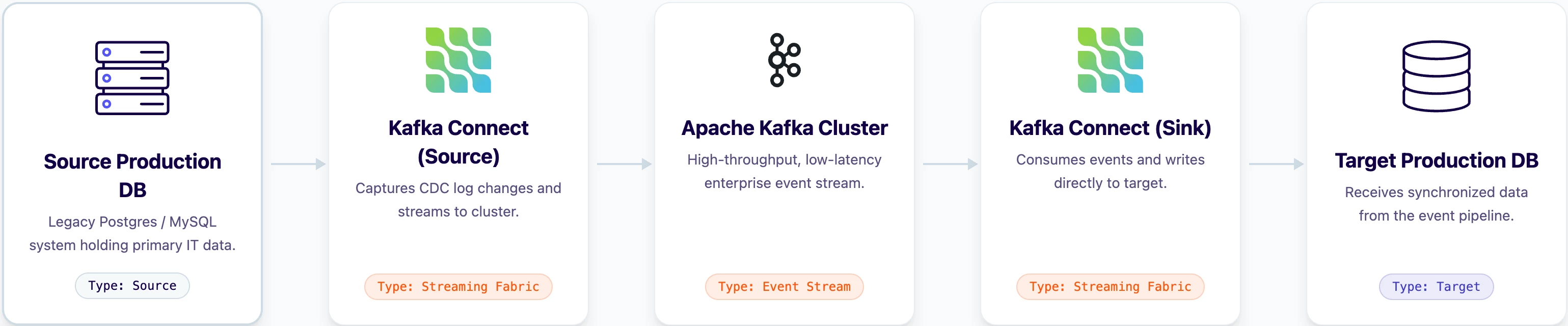
- Data Replication: You can create an exact replica of a table on a remote site, which is highly efficient across geographic locations and enables replication between different vendor databases, such as Postgres and MySQL. Instead of replication data into a target RDBMS it is also possible to stream the data in an Apache Iceberg-powered Lakehouse for further analytics.
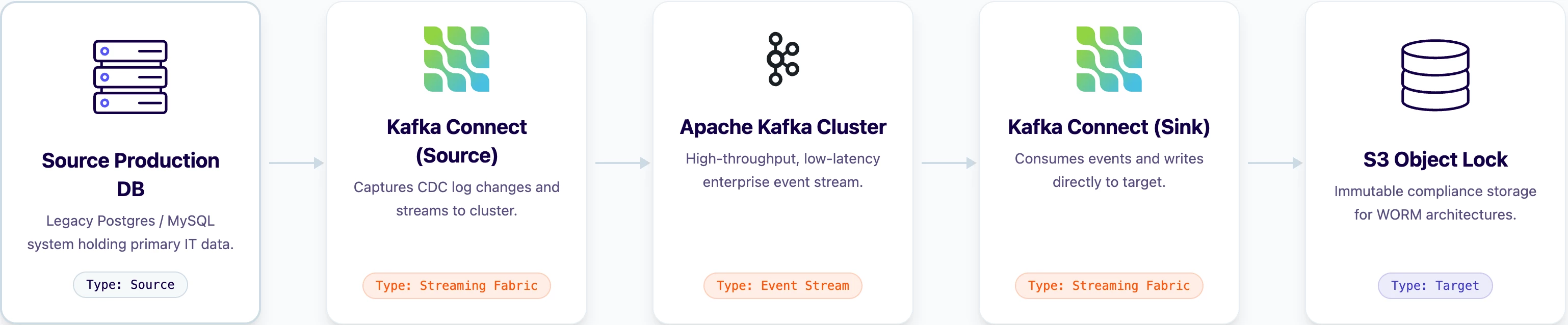
- Security Auditing & Compliance: You can store CDC events on WORM (Write Once, Read Many) storage to create an immutable audit trail of what has changed.
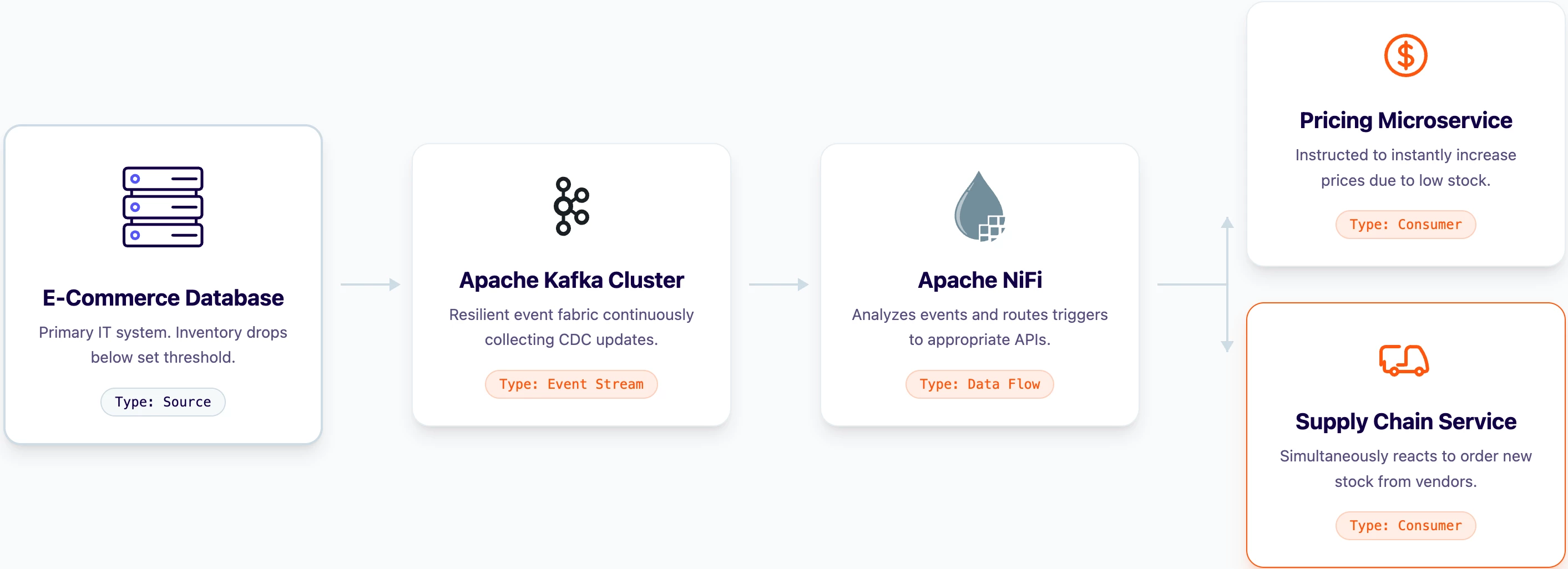
- Event-Driven Workflows: Businesses can act instantly on CDC events. In e-commerce, for example, if inventory drops below a threshold, a microservice can be instructed to increase prices while another orders new stock.
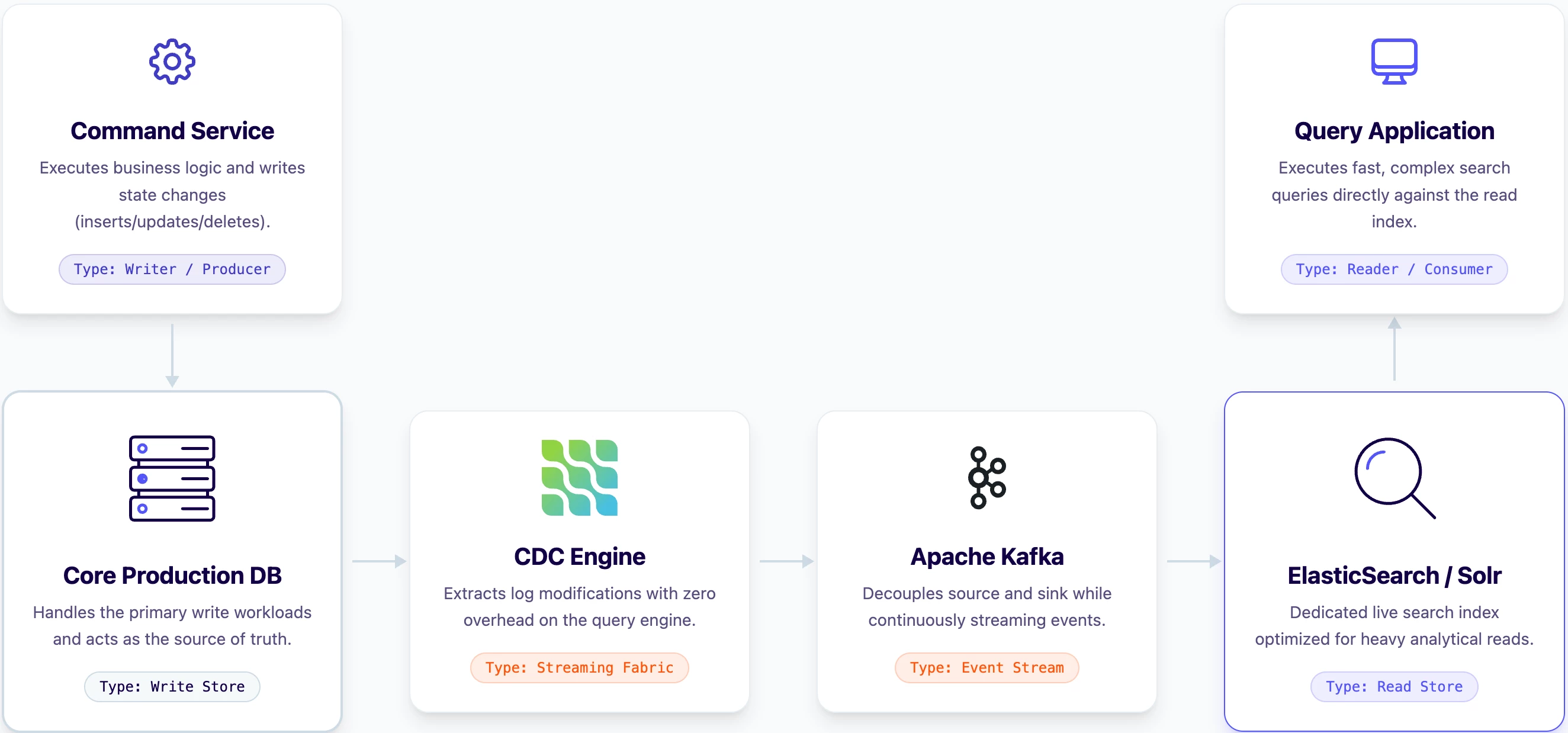
- Live Search Indexing: CDC events can be used to update search engines like ElasticSearch or Solr in real-time. This separates the read and write workloads, allowing heavy analytics to run without touching the core production database. Basically implementing a Command Query Responsibility Segregation ( CQRS )
- Outbox Pattern: Microservices can safely share updates by saving business data and a notification message into the same database in a single transaction, completely eliminating the risk of data getting out of sync.

Implementing CDC within Cloudera
Cloudera provides a versatile toolkit for implementing CDC to modernize IT data flows. Kafka Connect, NiFi, and Flink are not mutually exclusive in the Cloudera eco system and can be mixed and matched depending on your specific use case. Each of these components are relying on Debezium to provide CDC capabilities.
This enterprise-grade streaming platform can be deployed anywhere, on-premises, or in the public cloud (AWS, Azure, GCP). This flexibility ensures that the powerful CDC toolkit is available regardless of your infrastructure setup. Furthermore, Cloudera's Data-in-Motion solution handles both structured and unstructured data, enabling organizations to build Modern Data Architectures that power Data Lakehouse and AI initiatives. All streaming workloads are secured, monitored, and governed centrally using Cloudera Shared Data Experience (SDX), with Apache Ranger and Apache Atlas, ensuring the entire CDC process maintains strict enterprise-grade governance.
Apache Kafka & Kafka Connect
- Deploy this to establish a high-throughput, low-latency enterprise data pipeline where any database modification instantly feeds a shared event fabric.
- It optimizes production databases and decouples systems.
Apache NiFi
- NiFi is the ideal choice if your requirements involve complex schema routing, mandatory in-flight data cleansing, handling unreliable edge-to-cloud network links, or fanning out to multiple non-Kafka destinations simultaneously.
- It drives in-flight data governance, allowing enterprises to easily satisfy strict regulatory mandates like GDPR and HIPAA.
Apache Flink (SSB)
- Deploy Flink for real-time complex event processing (CEP), low-latency analytical reporting, and automated mirroring of transactional data directly into an analytical lakehouse.
- Flink can ingest CDC events and write them to an Iceberg table, while SSB simultaneously materializes the incoming stream for a real-time dashboard.
CDC in Action: IT–OT Convergence on the Factory Floor
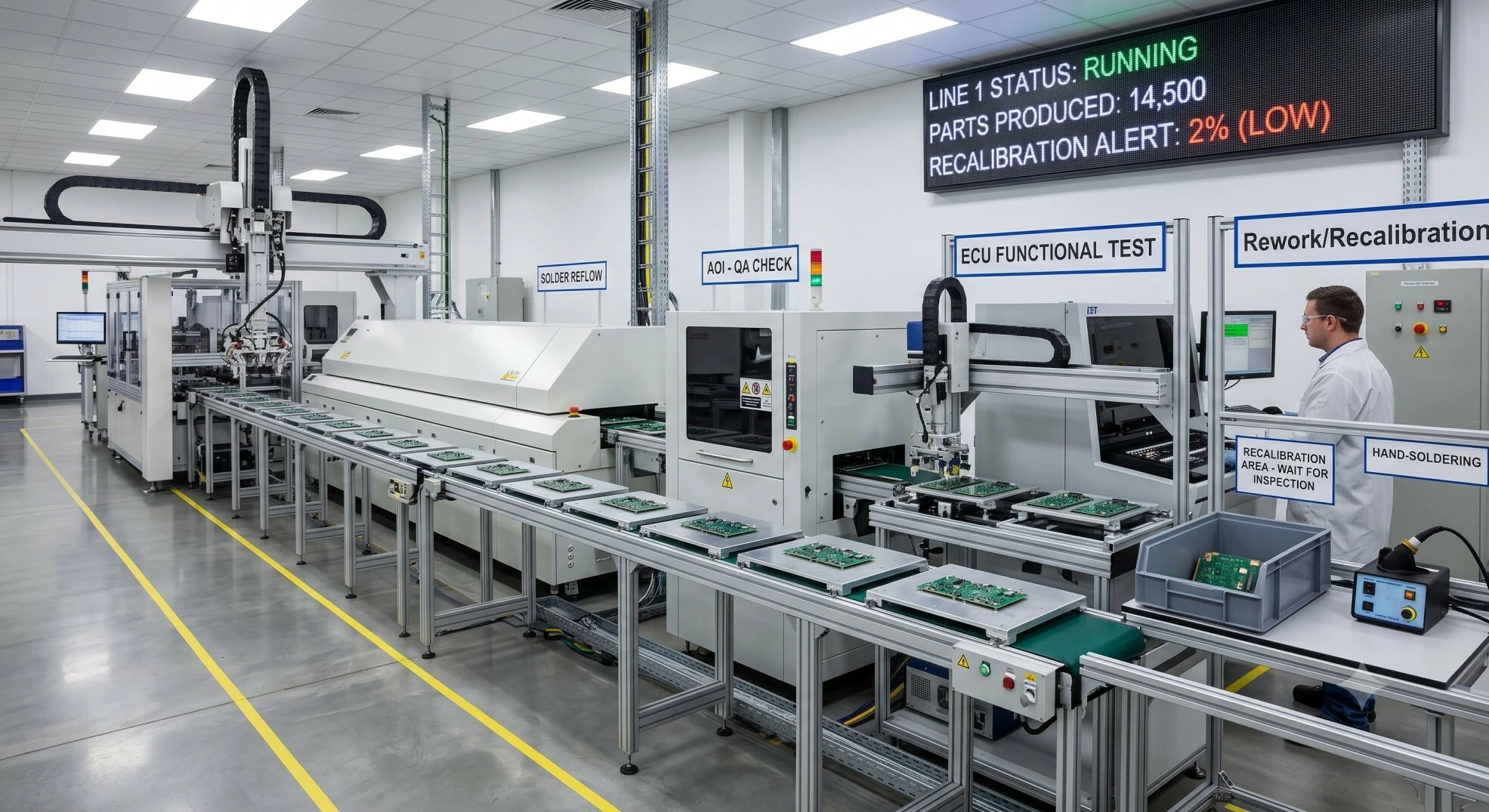
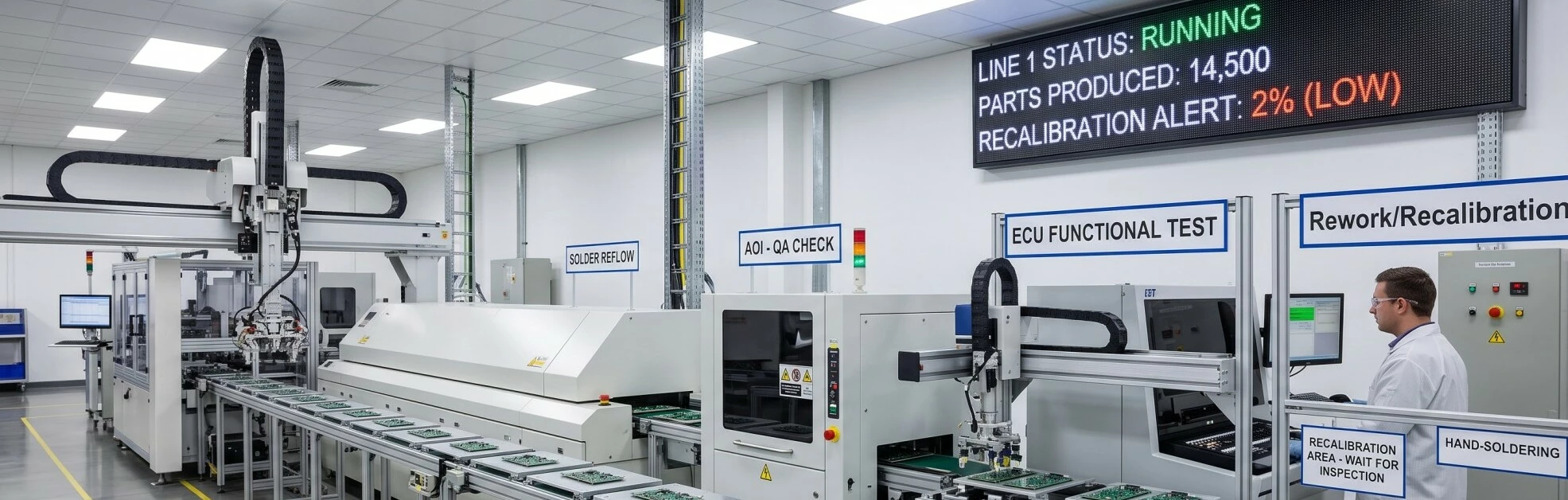
The true business value of this architecture is highlighted when IT and Operational Technology converge on the manufacturing floor. While IoT handles native real-time OT data, factory floors still heavily rely on IT systems, such as a highly-tuned PostgreSQL database running the Manufacturing Execution System (MES).
Consider a high-volume Electronic Control Unit (ECU) assembly line. In a traditional batch-reporting IT architecture, a factory manager might wait 24 hours to see how many parts failed or required recalibration. By the time the report runs, a misaligned robot might have already processed thousands of faulty parts.
With CDC and Cloudera Streaming Analytics bridging the gap:
- Changes within the IT database are captured the millisecond they happen.
- Flink can be configured to trigger an alert if, for example, 50 or more recalibrations occur within 5 seconds,indicating an error in a control station rather than standard yield loss.
- This reduces the time-to-insight from 24 hours to just 5 seconds, bringing IoT-like responsiveness to the legacy MES database.
- Heavy, real-time analytics are performed without running a single query against the source manufacturing database, fully protecting the primary IT system from analytical overhead.
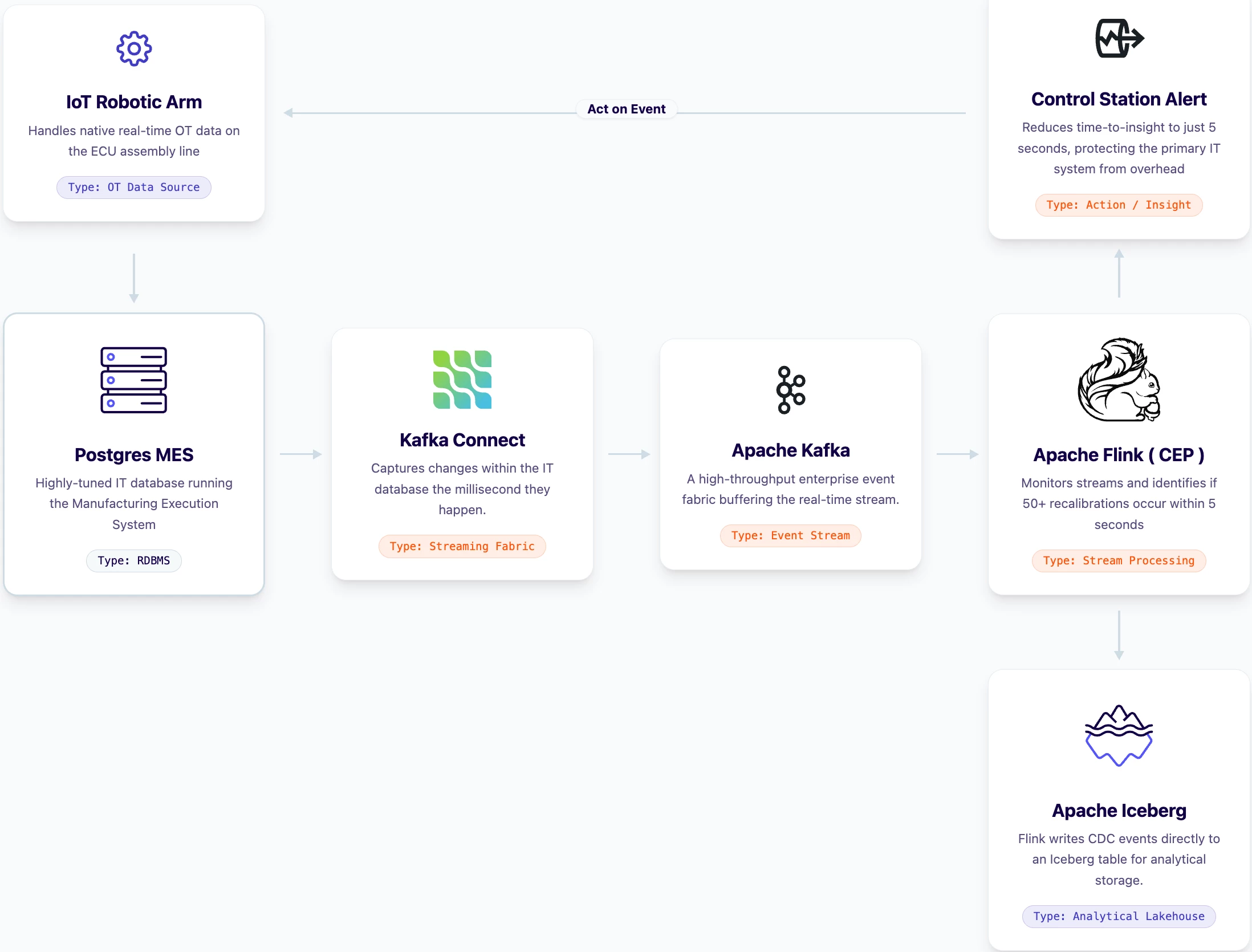
This diagram provides a sample flow diagram how data would flow in the factory floor example:
- Data Generation & Storage: The workflow begins on the factory floor with an IoT Robotic Arm generating real-time operational data, which is written directly into a legacy PostgreSQL MES database.
- Real-Time Extraction: To access this data without slowing down the primary database, Kafka Connect acts as a Change Data Capture (CDC) engine, extracting database changes the exact millisecond they occur.
- Streaming & Processing: These changes are buffered through an Apache Kafka cluster and consumed by Apache Flink, which performs Complex Event Processing (CEP), such as monitoring the stream to see if 50 or more recalibration errors occur within 5 seconds.
- Dual Output Routing: Once Flink processes the data, it simultaneously routes it to two different destinations:
- It triggers a real-time Control Station Alert on a manager's dashboard, dropping the time-to-insight from 24 hours to just 5 seconds.
- It writes the continuous stream of CDC events into an Apache Iceberg table to build an analytical lakehouse for long-term storage and reporting.
Conclusion
Change Data Capture (CDC) transforms legacy IT systems by replacing inefficient, batch-oriented processes with real-time, event-driven architecture. By enabling real-time, low-impact data synchronization, CDC not only increases operational agility and compliance through immutable audit trails but also serves as a critical foundation for AI, delivering the fresh, reliable data streams necessary for high-fidelity model training and real-time inference.
Cloudera elevates this capability by providing a unified, enterprise-grade streaming ecosystem. With the flexibility to deploy across any infrastructure, centralized governance via Cloudera SDX, and a comprehensive toolset including Kafka, NiFi, and Flink, Cloudera not only bridges the gap between IT and OT but also provides the scalable foundation required for modern Data Lakehouse and AI initiatives.