Hello @JB0000000000001
Appreciate your detailed response. To some of your reviews,
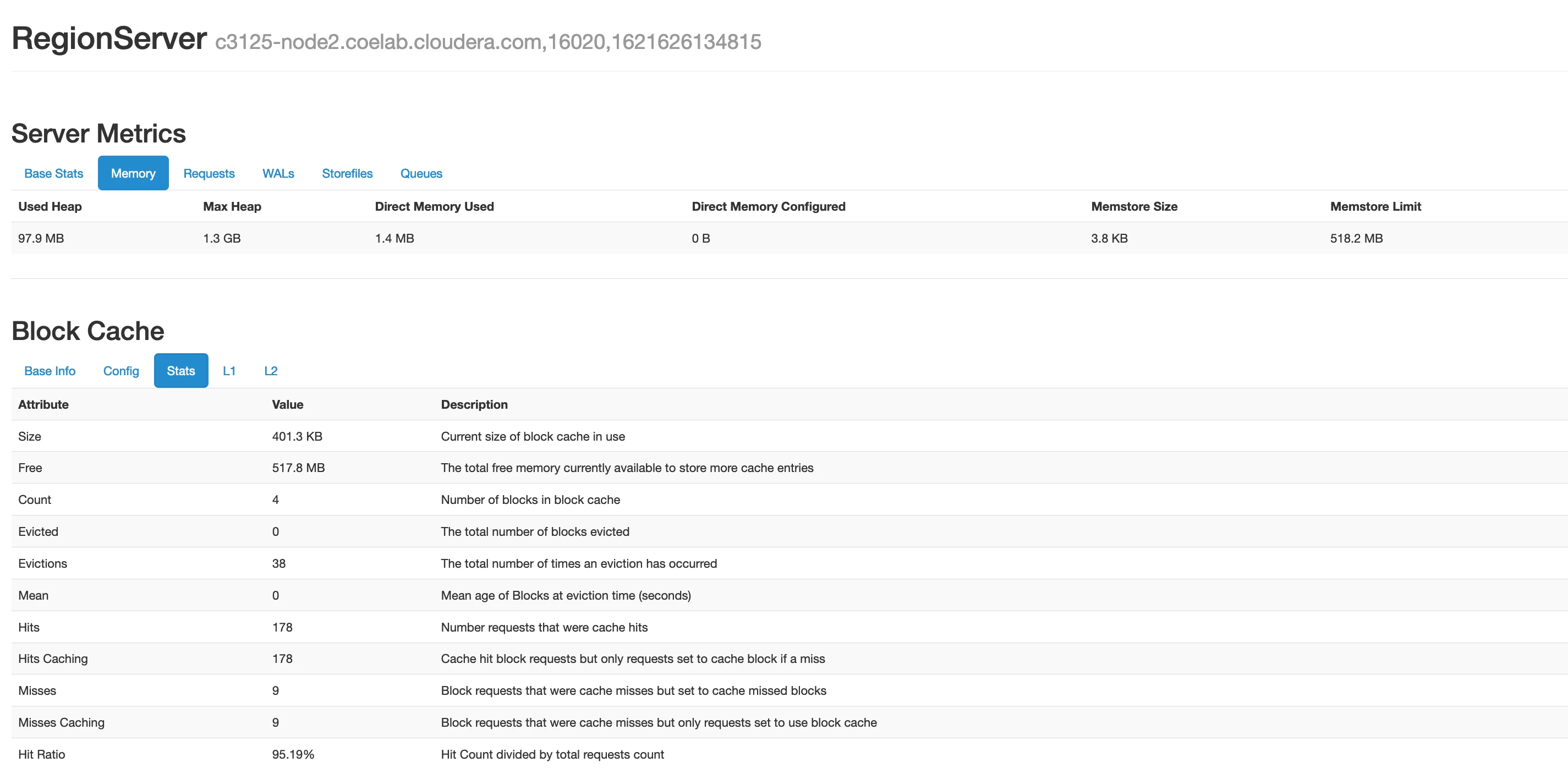
- To check upon the Impact of Row Counter on Caching, Created a Table on a Vanilla HBase Setup, Executed PE Write to insert 100,000 Rows. Flush & Restarted the Service to ensure there is no WAL Split write going through the MemStore, thereby assisting in Read Access. As shown below, there is no Read & Write with Server Metrics showing 4 Blocks of 400KB Size in Block Cache:

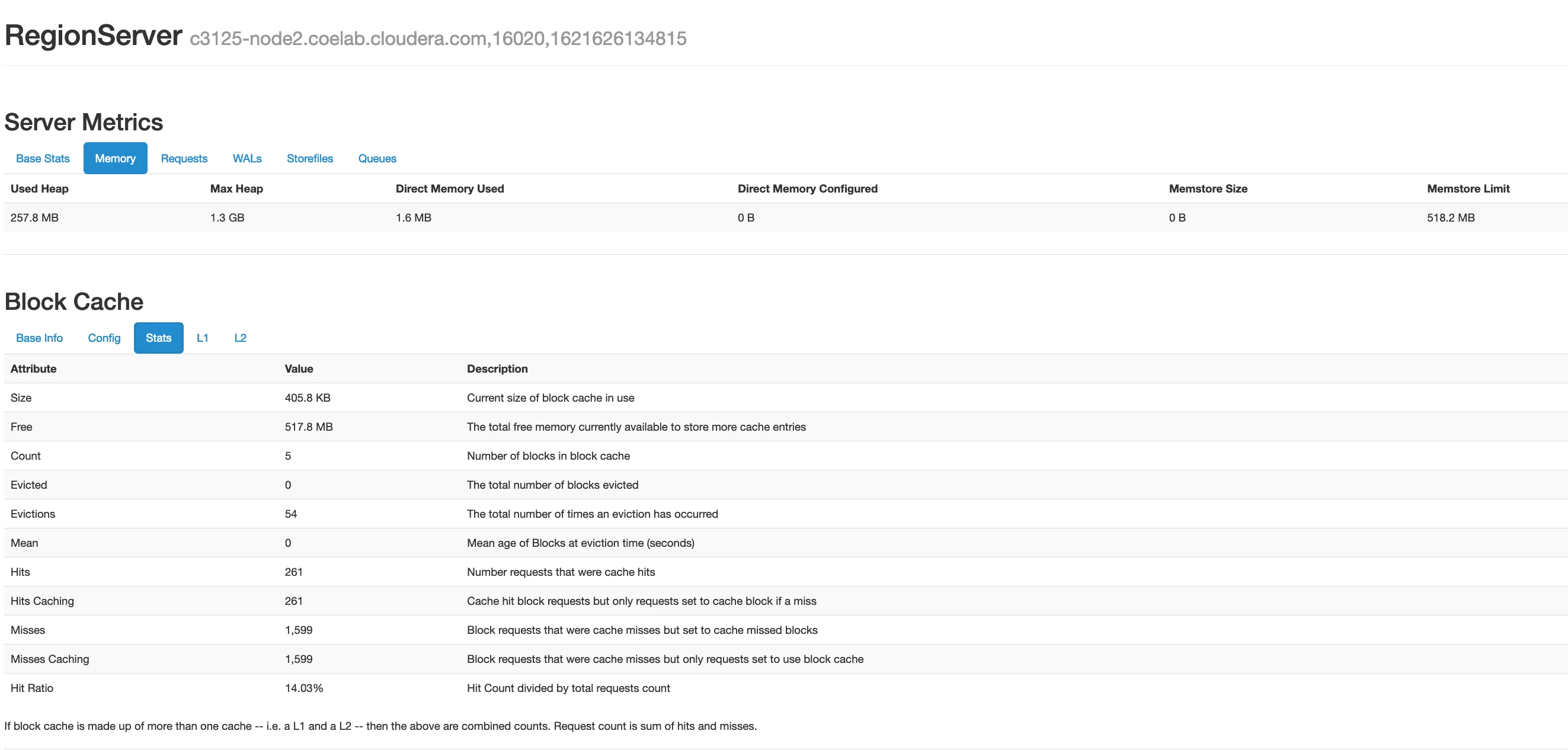
- After a RowCounter Job, We observed ~100,000 Reads with Used Heap increased around ~150MB yet Block Cache Size remained Similar.

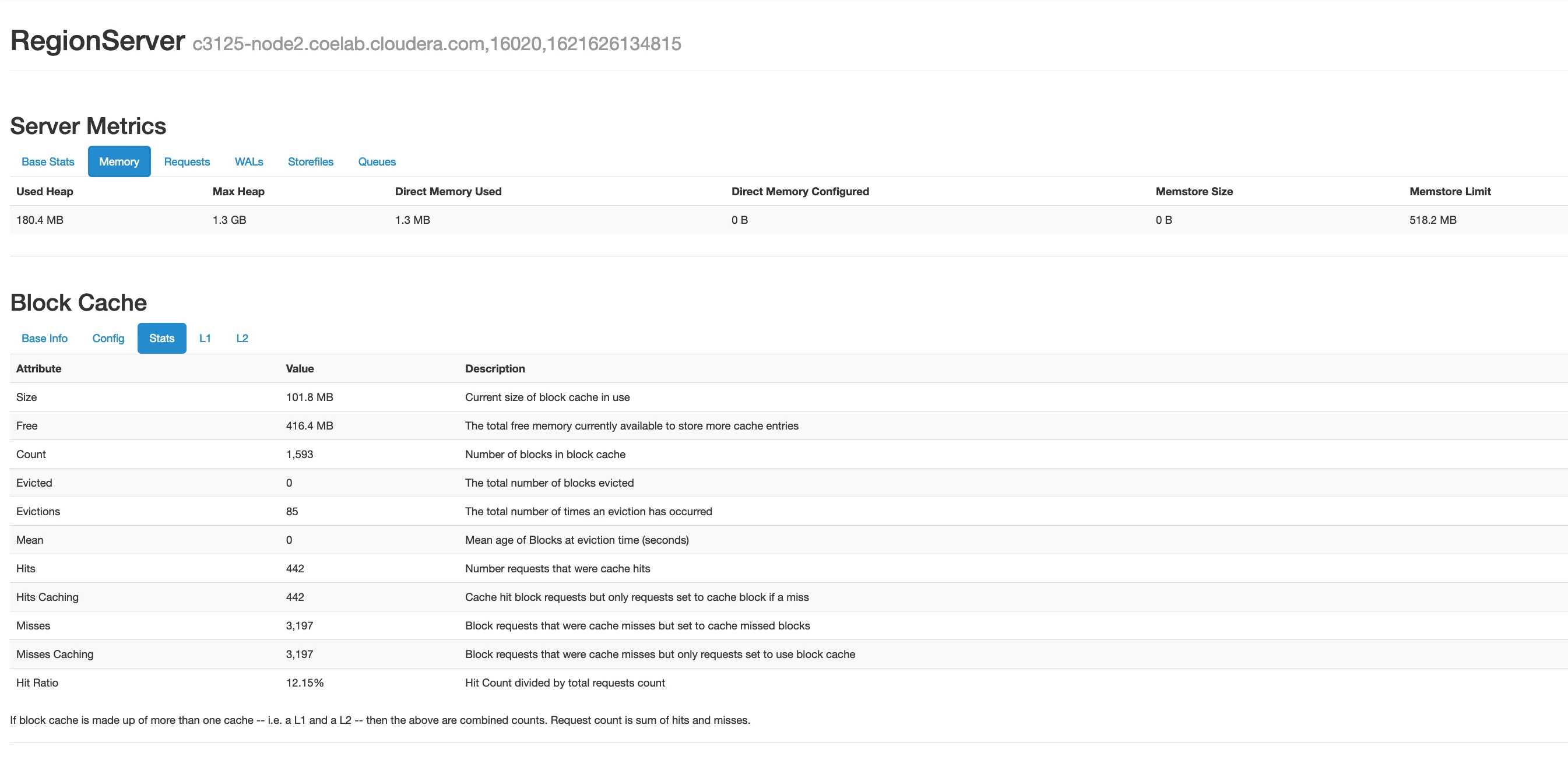
- After a Scan Operation reading each of the 100,000 Rows, the Read Request increased by 100,000 & the Block Cache Sizing increased by ~100MB & Block Count increasing by ~1500 & Hit Ration further deteriorating owing to larger Misses:

- Row Counter likely doesn't offer Caching benefits yet I have shared our Observation to ensure you can compare the same with your observation as well.
- Using the Region Server Grouping would still involve Eviction, yet the Competition & Quantity of Objects for Cache would be reduced by reducing the Tables involved within the RS Grouping Scope. This might be a bit Excessive approach yet I thought of sharing the same, in case you may wish to review.
- The Link [1] has the required Map Reduce Programs & I couldn't find anyone, which may fit the Use-Case of access all Data 1x. A Full Table Scan can be likely equivalent to running a Scan on HBase Shell for the Table. Or, Phoenix for SQL approach may be considered by you yet I believe writing a SELECT SQL using FTS is equivalent to Scanning the HBase Table via "scan".
- Link [2] does mention In-Memory Column Family are the last to evict, yet there's no guarantee that In-Memory Column Family would always remain in Memory.
- Also, I see you have "CACHE_INDEX_ON_WRITE" as True. So, I assume you might be extracting the most from your Memory unless Caching Policies possibility. While I haven't tested, Sharing Link [3] which talks about the various Caching Policies Test for Block Cache.
While I couldn't find any 100% guaranteed way to Cache the Objects, I believe you have implemented the most such functionalities already as discussed until now. I fear Compression & Encoding may not be helpful as Data is always Decompressed in Memory, likely leaving the possibility of reviewing the Caching Policies. I may have missed other possibilities & would share, if I come across any.
- Smarak
[1] https://hbase.apache.org/book.html#hbase.mapreduce.classpath
[2] https://hbase.apache.org/book.html#block.cache.design
[3] https://blogs.apache.org/hbase/entry/comparing_blockcache_deploys