@mike_bronson7
Migration from 190 to 220 is an additional 30 DN and NM theoretically an the Resource Manager Is responsible for resource management and consists of two components: the scheduler and application manager:
The scheduler allocates resources:
It has extensive information about an application's resource needs, which allows it to make scheduling decisions across all applications in the cluster. Essentially, an application can ask for specific resource requests, via the YARN application master, to satisfy its resource needs. The scheduler responds to a resource request by granting a container, which satisfies the requirements laid out by the application master in the initial resource request.
The application manager:
Accepts job submissions, negotiating the first container to execute the application-specific application master and to restart the application master container on failure.
Node managers
A node manager is a per-machine or VM framework agent responsible for managing resources available on a single node. They monitors resource usage for containers and report to the scheduler within the resource manager. You can have multiple node managers just ensure you have required memory reserved for the host OS funtionlity
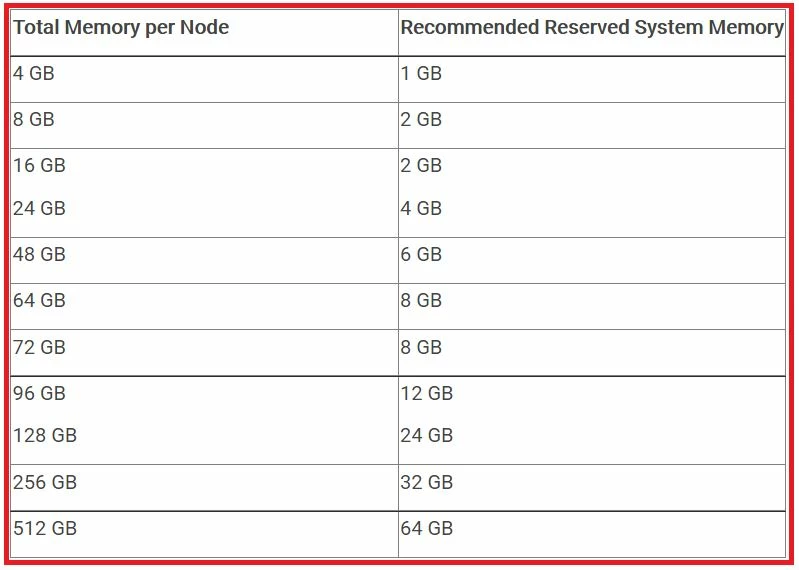
Just like Namenodes Resource managers need to be high spec servers if you can stick to some basics like the table below your 2 RM's can handle 200 nodes with ease.Take into consideration NN and ZK,HBase memory configs.
I remember running 300 data nodes/node manager in a project 2 years ago with exact setup like yours
Hope that helps