
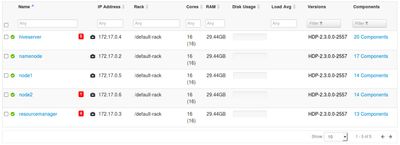
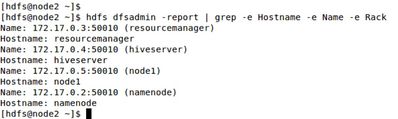
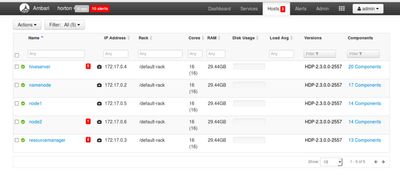
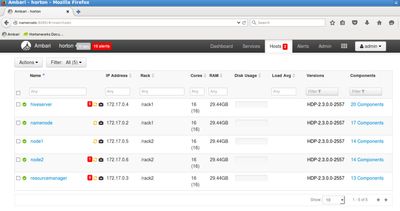

You will see that the rack mentioned for each of the hosts
in the test cluster is “/default-rack”. Which means Ambari (And HDFS and YARN)
thinks of this cluster inside a single rack i.e. default-rack. In other words,
it is not rack aware.
Now let us examine the configurations that will change after
we make the cluster rack-aware.
Steps to verify Rack Awareness:
1.Login to any node of your cluster. I am choosing
node2.
ssh root@node2
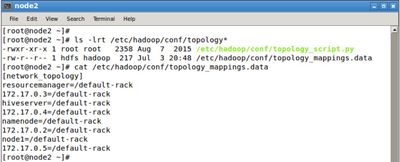
2.List the configuration files for rack awareness
and view the current mapping of the system:
ls –lrt /etc/hadoop/conf/topology*
cat /etc/hadoop/conf/toplogy_mappings.data
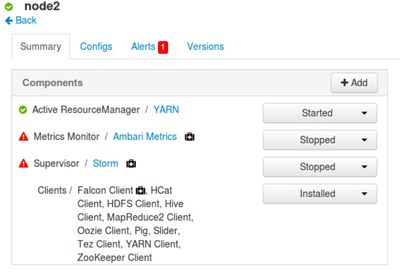
Qs: Why is node 2 not listed here?
Because node 2 does not contain a datanode.
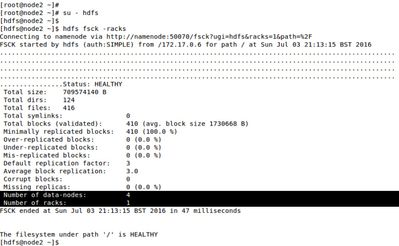
3.As super user run the fsck and dfsadmin commands
su – hdfs
hdfs fsck –racks
hdfs dfsadmin –report
For showing the relevant entries I grepped “hdfs dfsadmin –report”
command. You will see that there is no rack information attached to the current
cluster
Steps to setup Rack Awareness through Ambari:
1.Log in to Ambari UI
2.Click on Hosts tab
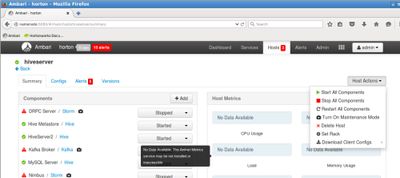
3.Click on Individual hosts and then click on Host
actions:
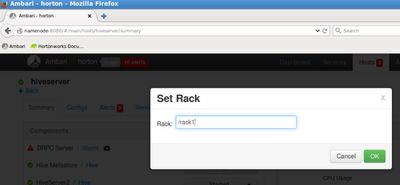
4.Click on Set Rack in the host actions and set
the rack name (I choose two racks: rack1 and rack2). Then click ok.
5.Hit Back and go back to the Hosts page.
Similarly set rack names for the other
nodes in your cluster.
So far you do not need to restart any
components.
6.I have set up the following rack names for the different
nodes in my cluster:
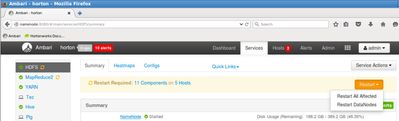
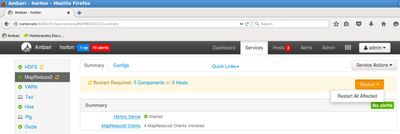
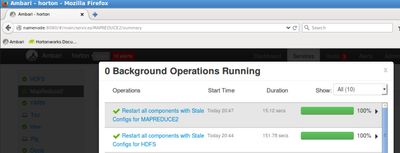
7.Now go back to your dashboard and you will see
that HDFS and MapReduce2 services needs to be restarted
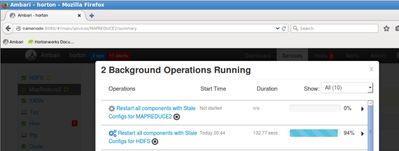
8.Restart those two services.
Wait for them to finish and your cluster is now Rack Aware
Steps to verify Rack Awareness:
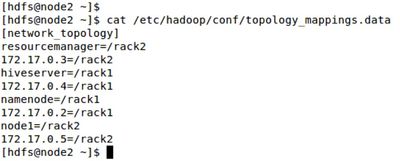
1.On the same terminal view the current topology mapping
of the system:
cat /etc/hadoop/conf/toplogy_mappings.data
As you can see the racks are mapped as we intended through Ambari Admin console.
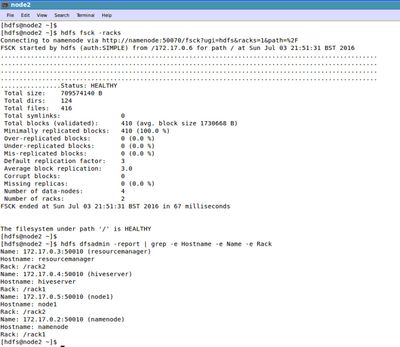
2.As super user run the fsck and dfsadmin commands
su – hdfs
hdfs fsck –racks
hdfs dfsadmin –report
The report shows that Rack Awareness is in effect.
After making the changes as specified for rack awareness, the resource manager (resourcemanager:8088/cluster) still shows the rack as /default-rack. Is this expected? Why doesn't the resource manager show the correct rack information?
What about adding new host and assign it at the same time to a specific rack? I'd like to avoid the host (data node) and then have to set the rack and restart again. Is there a way via Ambari UI?